
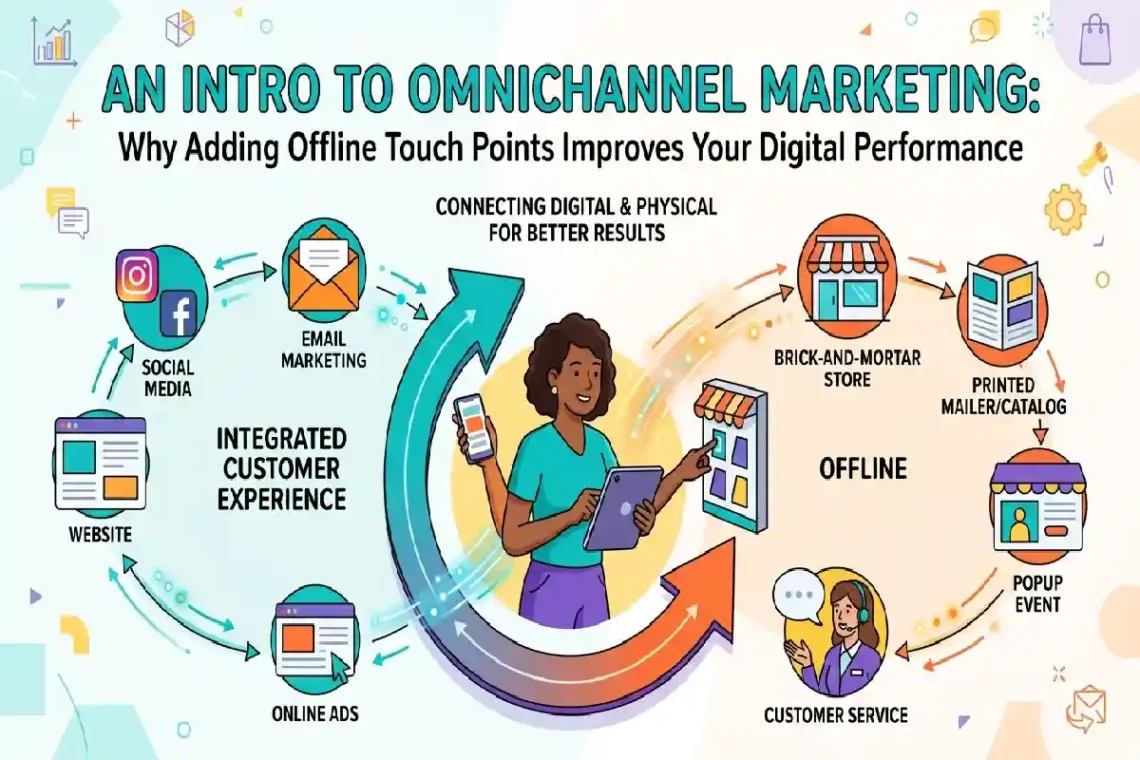
If you are focused on improving your marketing performance, you are almost certainly investing heavily in digital channels such as social media, email, search ads and content marketing. These channels are essential, but they are often treated as separate systems that operate independently. When that happens, you miss a critical opportunity to connect offline and online experiences into a unified omnichannel strategy that strengthens the entire customer journey.
Table of Contents
Understanding Omnichannel Marketing
Omnichannel marketing is the practice of delivering a connected and consistent customer experience across all touch points, whether they happen online or offline. Instead of treating each channel as an isolated campaign, you design them to work together as part of a single continuous journey.
From the customer’s perspective, there is no hard separation between your social media ads, website, physical store or any event they attend, making each interaction feel like part of the same conversation with your brand. They may discover your business through a digital ad, visit a physical location to learn more, and later receive personalized emails or retargeted ads that reflect what they did offline.
This makes the experience feel fluid and approachable for the average consumer. Market research shows nearly 90% of brands with excellent omnichannel experiences retain customers better than competitors. However, it is important to remember the difference between omnichannel and multichannel marketing. Multichannel means you are present in multiple places. On the other hand, omnichannel ensures those places are connected in a meaningful way so that information, behavior and intent travel with the customer wherever they go.
Why Offline Touch Points Still Matter in a Digital-First Environment
Even in a world dominated by digital marketing, offline touch points play an important role in shaping customer behavior. Physical experiences are more memorable because they engage multiple senses and create stronger impressions. When a customer physically interacts with your product, packaging or printed materials, that experience reinforces what they later see online. One survey found that 84% of marketing managers agree that direct mail improves advertising campaign performance.
These findings matter because trust is a key driver of digital performance. When people recognize your brand from an offline interaction, they are more likely to click your ads, open your emails and engage with your content, as familiarity reduces hesitation. In fact, research has shown that offline channels boost both online and overall retail sales.
Offline experiences also build credibility in ways digital channels sometimes struggle to achieve on their own. A customer who has spoken with your staff or seen your product firsthand has a stronger foundation of trust when they later encounter your digital campaigns. That connection translates into higher engagement and better conversion rates.
How Omnichannel Strategies Improve Digital Performance
When offline and online experiences are connected, digital marketing becomes more effective. One significant improvement comes from better targeting. When you understand what customers do in physical environments, you can refine your digital audience segments with far greater precision. Instead of relying only on clicks or website behavior, you are incorporating real-world intent into your decision-making.
This leads directly to higher conversion rates. Customers who engage with your brand across multiple channels move through the buying journey with greater confidence. Each interaction builds familiarity, reducing friction at the point when they make a decision. As such, by the time they respond to a digital campaign, they are often already partially convinced. In fact, customers feel more connected and valued when businesses integrate digital and physical touch points.
Omnichannel marketing also improves customer lifetime value. When people experience your brand consistently across different environments, they are more likely to return and continue engaging over time. The repeated reinforcement of your messaging builds loyalty and makes your company feel more reliable and present in their everyday life.
Practical Ways to Build an Omnichannel Strategy
If you’re ready to improve your digital performance through omnichannel marketing, you can start small and build strategically.
1. Connect Direct Mail to Digital Journeys
Instead of treating direct mail as a stand-alone campaign, integrate it with your online funnel. Use personalized landing pages or promo codes that track engagement to let you measure how other efforts influence online behavior. You can even consider using dynamic QR codes for greater flexibility, allowing you to change the content they link to without having to reprint or redistribute them.
2. Align Messaging Across Channels
Consistency is key. Research shows that a cohesive, positive online experience is vital for fostering engagement and brand loyalty, demonstrating the necessity of a seamless omnichannel experience. Your messaging, tone and visuals should feel unified. Whether someone is seeing a social media ad or opening a printed flyer, your brand must feel cohesive to build trust and reduce confusion.
3. Leverage Data to Connect Online and Offline
Modern tools make it easier than ever to connect offline interactions to digital outcomes. Customer relationship management systems, tracking URLs and customer segmentation tools can help you understand how each touch point contributes to conversions.
4. Personalize Across Channels
Personalization is no longer optional. For an estimated 65% of consumers, targeted promotions are among the top drivers of purchasing decisions. Whether it’s a tailored email or a customized mailer, addressing your audience’s needs and behavior directly makes your marketing significantly more effective.
5. Use Retargeting to Reinforce Offline Campaigns
If someone receives your direct mail or interacts with your offline branding, follow up with digital ads. This reinforcement strategy increases recall and nudges them closer to conversion. When offline engagement is paired with retargeting, you create a layered experience that feels more familiar and less intrusive to the customer.
Making the Most of Marketing
Omnichannel marketing isn’t about being everywhere at once. It is about ensuring that every place your customer interacts with you feels connected, relevant and consistent. Integrating offline touch points like direct mail into your digital strategy gives your audience more ways to remember and engage with your brand.
As these connections build over time, your marketing becomes more efficient, your messaging becomes more trusted and your digital performance improves because every interaction supports the next. This is your opportunity to expand your strategy. Start small, stay consistent and build a system where every touch point reinforces the next.