
Digital Marketing Plan: The Complete Guide to Creating One That Works
In today’s digital-first world, throwing marketing tactics at the wall and hoping something sticks is a recipe for wasted budgets and missed opportunities.
What you need is a digital marketing plan—a clear, actionable roadmap that aligns your marketing efforts with your business goals, ensures you’re reaching the right audience, and measures what’s actually working.
Whether you’re a small business owner wearing multiple hats or a marketing professional building a strategy for a growing company, this guide walks you through everything you need to create a digital marketing plan that drives results.
Table of Contents
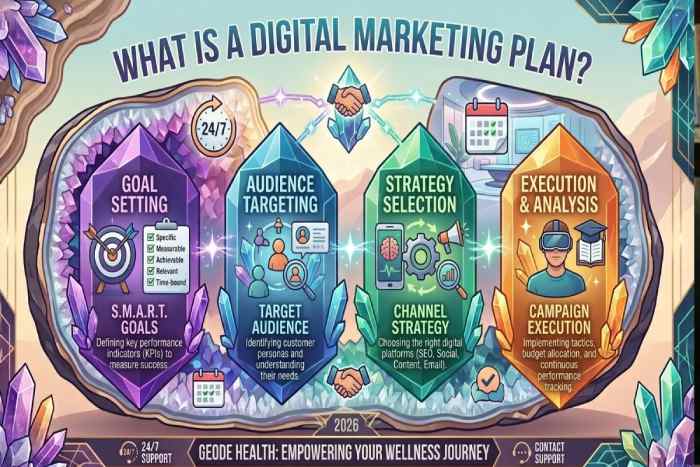
What is a Digital Marketing Plan?
A digital marketing plan is a comprehensive document that outlines how you’ll use digital channels—like your website, social media, email, search engines, and paid advertising—to achieve specific business goals.
It’s your strategic blueprint that answers:
- What you want to achieve (goals)
- Who you’re trying to reach (audience)
- Where you’ll reach them (channels)
- How you’ll engage them (tactics and content)
- When you’ll execute (timeline)
- How much you’ll spend (budget)
- How you’ll measure success (KPIs)
Think of it as a GPS for your marketing efforts—it keeps you on track, helps you allocate resources wisely, and ensures every action ties back to measurable business outcomes.
Digital Marketing Strategy vs. Plan vs. Campaign vs. Tactics
These terms are often used interchangeably, but they serve different purposes. Understanding the hierarchy is critical:
| Level | Definition | Example |
| Strategy | The overarching, long-term approach to achieving business goals | “Build brand authority in the SaaS industry” |
| Plan | The detailed roadmap that operationalizes the strategy | A 12-month document outlining goals, channels, budget, and timeline |
| Campaign | Time-bound initiatives focused on specific objectives | “Q2 product launch campaign” |
| Tactics | Specific actions executed within campaigns | “Publish 3 blog posts per week,” “Run LinkedIn ads targeting CTOs” |
Example in action:
- Strategy: Increase market share by becoming the go-to resource for small business finance advice
- Plan: 12-month content marketing plan targeting small business owners
- Campaign: “Tax Season Survival Guide” campaign (January–April)
- Tactics: Weekly blog posts, downloadable tax checklist, email nurture sequence, targeted Facebook ads
Why Your Business Needs a Digital Marketing Plan
A well-crafted digital marketing plan delivers measurable benefits:
- Clarity and focus
Without a plan, marketing becomes reactive—chasing every new trend without strategic direction. A plan ensures every dollar and hour spent serves a purpose. - Resource optimization
Marketing budgets are finite. A plan helps you allocate resources to high-impact channels and avoid wasteful spending. - Team alignment
A documented plan ensures everyone—from leadership to execution teams—understands priorities, timelines, and success metrics. - Measurable results
Plans establish baseline metrics and KPIs, making it possible to track performance, identify what’s working, and pivot when needed. - Competitive advantage
Businesses with documented plans are 313% more likely to report successthan those without, according to research from CoSchedule.
What Should Be Included in a Digital Marketing Plan?
A comprehensive digital marketing plan typically includes:
- Executive Summary
High-level overview of goals, target audience, and key strategies. - Situation Analysis
Current state assessment including market trends, competitive landscape, and internal capabilities. - Goals and Objectives
Specific, measurable targets aligned with business outcomes (SMART goals). - Target Audience and Buyer Personas
Detailed profiles of ideal customers including demographics, behaviors, pain points, and preferences. - Competitive Analysis
Evaluation of competitors’ strengths, weaknesses, and digital presence. - SWOT Analysis
Assessment of internal Strengths, Weaknesses, external Opportunities, and Threats. - Channel Strategy
Which digital channels you’ll use and why (SEO, social media, email, paid ads, content marketing). - Content Strategy
Types of content you’ll create, topics, formats, and distribution channels. - Budget Allocation
How you’ll distribute resources across channels and campaigns. - Marketing Calendar
Timeline for campaigns, content publication, and key milestones. - KPIs and Measurement Framework
Metrics you’ll track to measure success (traffic, leads, conversions, ROI). - Tools and Technology
Platforms and software needed for execution and measurement.
How to Create a Digital Marketing Plan: 10 Essential Steps
Let’s break down the process of building your plan.
1: Set SMART Goals and Objectives
Your goals are the foundation of your plan. Without clear targets, you can’t measure success.
Use the SMART framework:
- Specific: Clearly defined, not vague
- Measurable: Quantifiable with specific metrics
- Achievable: Realistic given resources and constraints
- Relevant: Aligned with broader business goals
- Time-bound: Has a clear deadline
Vague goal:
“Increase website traffic.”
SMART goal:
“Increase organic website traffic by 40% (from 10,000 to 14,000 monthly visitors) within 6 months through SEO and content marketing.”
Common digital marketing goals:
- Increase brand awareness
- Generate qualified leads
- Drive online sales
- Improve customer retention
- Build email subscriber list
- Increase social media engagement
- Boost customer lifetime value
Pro tip: Align marketing goals with the customer journey stage they support:
- Awareness stage: Focus on reach, impressions, website traffic
- Consideration stage: Focus on engagement, email signups, content downloads
- Decision stage: Focus on conversions, trials, demos, sales
2: Define Your Target Audience and Buyer Personas
You can’t market to “everyone.” Effective marketing requires precise audience targeting.
How to define your audience:
- Analyze existing customers
Use analytics, CRM data, and sales insights to identify common characteristics among your best customers. - Create detailed buyer personas
Develop 2–4 fictional profiles representing your ideal customers.
Buyer persona template:
Persona Name: Marketing Manager Maria
Demographics:
- Age: 35–45
- Location: Urban areas, US
- Job Title: Marketing Manager at B2B SaaS companies (50–200 employees)
- Income: 120,000
Psychographics:
- Goals: Drive qualified leads, prove marketing ROI, adopt new tools efficiently
- Pain Points: Limited budget, small team, pressure to show results quickly
- Behaviors: Active on LinkedIn, subscribes to marketing newsletters, attends webinars
Media Consumption:
- Platforms: LinkedIn, Twitter, industry blogs (Marketing Land, HubSpot)
- Content preferences: Case studies, how-to guides, templates
Buying Journey:
- Awareness: Searches “how to generate B2B leads”
- Consideration: Compares marketing automation platforms
- Decision: Looks for free trials, customer reviews, ROI calculators
Pro tip: Interview actual customers to validate your personas. Ask: “How did you find us? What problem were you trying to solve? What almost made you choose a competitor?”
3: Conduct a Competitive Analysis
Understanding your competitors’ digital presence helps you identify opportunities and differentiate your approach.
What to analyze:
- Identify your top 3–5 competitors
Include direct competitors (same product/service) and indirect competitors (solving the same problem differently). - Audit their digital presence:
- Website: Design, user experience, messaging, calls-to-action
- SEO: Top-ranking keywords, organic traffic (use tools like SEMrush or Ahrefs)
- Content: Blog frequency, topics, formats (video, podcasts, infographics)
- Social Media: Platforms used, posting frequency, engagement rates
- Email Marketing: Sign up for their newsletters and analyze cadence, content
- Paid Advertising: What ads are they running? (Use Facebook Ad Library, Google Ads)
- Identify gaps and opportunities:
- What are they doing well that you should emulate?
- What are they missing that you could own?
- Which channels are they ignoring?
Example:
Competitor A dominates SEO but has weak social media presence → Opportunity to build authority on LinkedIn and Instagram.
4: Perform a SWOT Analysis
SWOT (Strengths, Weaknesses, Opportunities, Threats) analysis helps you understand your internal capabilities and external market conditions.
Framework:
| Strengths (Internal) | Weaknesses (Internal) |
| What do you do well? | What needs improvement? |
| Strong brand reputation | Limited marketing budget |
| Experienced team | Small content library |
| High customer satisfaction | Weak email list |
| Opportunities (External) | Threats (External) |
| What market trends favor you? | What external challenges exist? |
| Growing demand for your product | Aggressive competitors |
| Underserved audience segment | Economic downturn |
| New marketing channels (TikTok) | Platform algorithm changes |
How to use SWOT insights:
- Leverage strengths: Capitalize on what you do best
- Address weaknesses: Prioritize improvements
- Exploit opportunities: Move quickly on favorable trends
- Mitigate threats: Develop contingency plans
5: Choose Your Digital Marketing Channels
Not all channels are right for every business. Focus your resources where your audience is most active and engaged.
Major digital marketing channels:
SEO (Search Engine Optimization)
Best for: Long-term organic traffic, building authority
Time to results: 3–6 months
Investment: Low to moderate (content, tools, technical optimization)
Content Marketing
Best for: Educating audiences, building trust, supporting SEO
Formats: Blogs, ebooks, whitepapers, videos, podcasts
Investment: Moderate (creation, distribution)
Social Media Marketing
Best for: Brand awareness, engagement, community building
Top platforms: LinkedIn (B2B), Instagram (visual brands), Facebook (broad reach), TikTok (Gen Z), Twitter (real-time engagement)
Investment: Low to high (organic vs. paid)
Email Marketing
Best for: Nurturing leads, customer retention, driving conversions
Average ROI: 1 spent
Investment: Low (platform costs)
Paid Advertising (PPC)
Best for: Immediate traffic, targeting specific audiences, product launches
Platforms: Google Ads, Facebook Ads, LinkedIn Ads, Instagram Ads
Investment: Moderate to high (ad spend + management)
Video Marketing
Best for: Engagement, explaining complex topics, building trust
Platforms: YouTube, TikTok, Instagram Reels, LinkedIn
Investment: Low to high (DIY vs. professional production)
Influencer Marketing
Best for: Reaching niche audiences, building credibility
Investment: Varies widely (micro-influencers to celebrities)
How to choose:
- Where is your audience? Match channels to where your buyer personas spend time
- What are your goals? Awareness → social media; leads → SEO + email; sales → PPC
- What’s your budget? Start with 2–3 channels and expand as you see ROI
- What can you execute consistently? Better to excel on 2 channels than spread thin across 6
6: Set Your Marketing Budget
Budget determines what’s possible. Allocate resources strategically based on goals and expected ROI.
Common budgeting approaches:
- Percentage of revenue
Allocate 5–15% of annual revenue to marketing (varies by industry and growth stage). - Objective and task method
Calculate costs for each tactic needed to achieve goals, then total them up. - Competitive parity
Match competitors’ spending levels.
Sample budget allocation (B2B SaaS company with $200k annual marketing budget):
- SEO and content marketing: 30% ($60k)
- Paid advertising (Google, LinkedIn): 25% ($50k)
- Marketing technology (CRM, automation, analytics): 20% ($40k)
- Email marketing: 10% ($20k)
- Social media management: 10% ($20k)
- Events and webinars: 5% ($10k)
Pro tips:
- Track spending vs. results by channel to optimize allocation over time
- Reserve 10–15% for testing new channels or tactics
- Include costs for tools, freelancers, agencies, and internal time
7: Develop Your Content Strategy and Calendar
Content is the fuel that powers most digital marketing channels. Without a consistent content engine, your plan will stall.
Content strategy components:
- Content types and formats
- Blog posts and articles
- Videos and webinars
- Ebooks and whitepapers
- Case studies and testimonials
- Infographics and visual content
- Podcasts
- Email newsletters
- Content themes and topics
Align content with:
- Buyer persona pain points
- Customer journey stages
- SEO keyword research
- Industry trends and seasonality
- Content calendar
Map out content production and publication for 3–6 months ahead.
Sample calendar entry:
- Week of March 15
- Blog: “10 Email Marketing Mistakes to Avoid” (SEO target: email marketing tips)
- Social: Share blog + behind-the-scenes video
- Email: Weekly newsletter featuring blog + case study
- Paid: Promote blog via LinkedIn ads
Pro tip: Batch content creation—write multiple blog posts in one session, film several videos in one day. It’s more efficient than starting from scratch every time.
8: Define Tactics and Campaigns for Each Channel
Tactics are the specific actions you’ll take within each channel to execute your strategy.
Example: LinkedIn marketing tactics
- Goal: Generate 50 qualified B2B leads per quarter
- Tactics:
- Publish 3 thought-leadership articles per week
- Share customer success stories and case studies
- Run LinkedIn Lead Gen ads targeting Marketing Managers
- Engage in relevant industry groups
- Use LinkedIn InMail for personalized outreach
Example: Email marketing tactics
- Goal: Nurture leads and increase trial signups by 25%
- Tactics:
- Welcome email series for new subscribers (5 emails over 2 weeks)
- Monthly newsletter with industry insights
- Product education series for trial users
- Re-engagement campaign for inactive subscribers
Campaign example:
“Back-to-School Productivity Boost” Campaign (August–September)
- Goal: Drive 500 new app downloads
- Channels: Blog, email, Instagram, Google Ads
- Tactics:
- Blog series: “5 Apps to Stay Organized This Fall”
- Email: Exclusive discount for subscribers
- Instagram: User-generated content contest
- Google Ads: Target “productivity apps” keywords
9: Establish KPIs and Measurement Framework
If you don’t measure, you can’t improve. Define how you’ll track progress toward your goals.
Key metrics by goal:
Brand Awareness:
- Website traffic (sessions, unique visitors)
- Social media reach and impressions
- Brand search volume
- Social media followers and engagement rate
Lead Generation:
- Marketing Qualified Leads (MQLs)
- Conversion rate (visitor → lead)
- Cost per lead (CPL)
- Email subscriber growth
Sales and Revenue:
- Sales Qualified Leads (SQLs)
- Customer acquisition cost (CAC)
- Conversion rate (lead → customer)
- Revenue attributed to marketing
Customer Retention:
- Customer lifetime value (CLV)
- Repeat purchase rate
- Email open and click rates
- Net Promoter Score (NPS)
Tools for measurement:
- Google Analytics: Website traffic, behavior, conversions
- HubSpot / Salesforce: CRM and marketing automation
- SEMrush / Ahrefs: SEO performance
- Social media analytics: Native platform insights (Facebook Insights, LinkedIn Analytics)
- Google Data Studio / Tableau: Dashboard creation
Pro tip: Create a monthly dashboard that tracks your top 5–7 KPIs in one place. Share it with leadership to maintain visibility and accountability.
10: Create an Execution Timeline and Review Process
A plan without execution is just a document. Map out when things will happen and when you’ll review progress.
Execution timeline:
- Monthly: Publish content calendar, execute campaigns, review KPIs
- Quarterly: Review overall performance, adjust budget allocation, test new tactics
- Annually: Conduct comprehensive audit, refresh buyer personas, reset goals
Review process:
- Weekly standups: Team syncs on priorities, blockers, wins
- Monthly performance reviews: Analyze KPIs, identify trends, make quick adjustments
- Quarterly strategy reviews: Step back and assess whether the overall plan is working
- Annual planning: Refresh the entire plan based on learnings
Pro tip: Build flexibility into your plan. Markets change, algorithms shift, and campaigns flop. The best plans are adaptable.
Digital Marketing Channels Explained
Let’s briefly explore each major channel:
SEO (Search Engine Optimization)
SEO improves your website’s visibility in search engine results, driving organic (unpaid) traffic.
Key tactics:
- Keyword research and optimization
- Technical SEO (site speed, mobile-friendliness)
- On-page SEO (title tags, meta descriptions, headers)
- Link building and authority development
Best for: Long-term traffic, building authority
Content Marketing
Creating valuable content that attracts, engages, and converts your audience.
Best for: Educating audiences, supporting SEO, building trust
Social Media Marketing
Using platforms like Facebook, Instagram, LinkedIn, Twitter, and TikTok to build brand presence.
Best for: Brand awareness, engagement, community building
Email Marketing
Sending targeted messages directly to subscribers’ inboxes.
Best for: Nurturing leads, driving conversions, customer retention
Paid Advertising (PPC, Social Ads)
Paying to display ads on search engines, social platforms, or other websites.
Best for: Immediate traffic, precise targeting, product launches
Video Marketing
Using video content to engage audiences on YouTube, social media, or your website.
Best for: Explaining products, building trust, increasing engagement
Influencer Marketing
Partnering with influencers to promote your brand to their followers.
Best for: Reaching niche audiences, building credibility quickly
Tools and Resources for Digital Marketing Planning
Project Management Tools
- Asana, Trello, Monday.com: Organize tasks, campaigns, and timelines
- CoSchedule: Marketing calendar and workflow management
Analytics and Reporting Tools
- Google Analytics: Track website performance
- Google Data Studio: Create custom dashboards
- HubSpot: All-in-one CRM and marketing analytics
Marketing Automation Platforms
- HubSpot, Marketo, ActiveCampaign: Automate email, lead nurturing, and workflows
Common Digital Marketing Plan Mistakes to Avoid
Setting Vague Goals
Mistake: “We want more traffic.”
Fix: “Increase organic traffic by 40% in 6 months.”
Ignoring Your Audience
Mistake: Creating content you think is interesting without validating audience needs.
Fix: Use surveys, interviews, and analytics to understand what your audience actually wants.
Spreading Resources Too Thin
Mistake: Trying to be on every platform with mediocre execution.
Fix: Focus on 2–3 channels and excel there before expanding.
Failing to Measure Results
Mistake: Launching campaigns without tracking performance.
Fix: Set up tracking from day one and review KPIs regularly.
Digital Marketing Plan Template and Example
Template structure:
- Executive Summary (1 page)
- Business Goals (SMART goals)
- Target Audience (buyer personas)
- Competitive Analysis (top competitors)
- SWOT Analysis
- Channel Strategy (which channels, why)
- Content Strategy (themes, calendar)
- Budget (allocation by channel)
- KPIs and Metrics
- Timeline (monthly milestones)
Example (B2B SaaS company):
Goal: Generate 200 MQLs per quarter
Audience: Marketing managers at mid-market B2B companies
Channels: SEO, LinkedIn, email, content marketing
Budget: $50k/quarter
KPIs: Website traffic, email subscribers, MQL conversion rate
Timeline: Q1–Q4 2026
Final Thoughts: Turning Your Plan Into Action
A digital marketing plan is only valuable if you execute it.
The businesses that succeed aren’t those with the most elaborate plans—they’re the ones that consistently execute, measure results, and adapt based on what they learn.
Your next steps:
- Block time to build your plan. Dedicate 4–8 hours to work through the 10 steps in this guide.
- Start small if needed. A simple plan executed well beats a perfect plan that never launches.
- Get team buy-in. Share your plan with stakeholders and incorporate their feedback.
- Set up tracking immediately. Don’t wait to implement analytics and KPI dashboards.
- Review and optimize monthly. Marketing is iterative—learn from what works and double down.