

Private and Public Sector Communication. Communication shapes trust, policy, and profits—whether you’re a government official announcing reforms or a CEO launching a product. Public sector focuses on accountability; private drives revenue. This guide breaks down differences with practical tips.
Table of Contents
Defining the Sectors
Public sector communication informs citizens about services, policies, and spending. Think tax updates or health alerts from ministries.
Private sector builds brands and sales through targeted messaging. Companies like Reliance use it for customer loyalty.
Public Sector Communication Basics
Governments prioritize transparency. Messages must comply with laws, reaching diverse publics via official channels.
Private Sector Communication Essentials
Businesses aim for persuasion. Marketing teams craft narratives to boost stock prices or market share.
Core Differences Compared
Public comms serve society; private chases profit.
Objectives and Audiences
Public sector communication objectives center on informing citizens, ensuring transparency, and driving civic engagement—serving broad, diverse audiences like voters, taxpayers, and stakeholders. Private sector focuses on persuasion for profit, targeting customers, investors, and employees with tailored messaging.
Public Sector:
- Raise awareness of policies/services (e.g., vaccination drives).
- Promote accountability (budget reports).
- Enable participation (public consultations).
- Manage crises transparently (emergency alerts).
Private Sector:
- Drive sales/conversions (product launches).
- Build brand loyalty (customer emails).
- Attract investment (earnings calls).
- Boost employee morale (internal campaigns).
Audience Differences
| Sector | Primary Audiences | Key Traits | Communication Style |
| Public | Citizens, voters, media, regulators | Diverse literacy, expectations of neutrality | Inclusive, formal, multi-channel (SMS, radio, social) |
| Private | Customers, shareholders, partners | Segmented by behavior/data | Personalized, urgent, data-driven (email, ads) |
Public Example: India’s Swachh Bharat uses simple visuals for rural audiences, hitting 90% awareness.
Private Example: Flipkart segments emails (“Abhi sale on!”) for 25% open rates.
Matching Objectives to Audiences
- Define First: Public starts with policy goals; private with revenue targets.
- Profile Deeply: Public maps demographics (urban/rural); private uses analytics (past buys).
- Tailor Channels: Public favors WhatsApp for speed; private Instagram Reels for youth.
Pro Tip: Both benefit from audience insight—public via surveys, private via CRM. Misalign? Public messages flop on apathy; private wastes ad spend.
In 2026, AI personalizes both: chatbots answer public queries 24/7; private predicts churn with 85% accuracy. Start with clear objectives, then audience maps for impact.
Channels and Tools
Public: Press conferences, websites. Private: Social ads, influencers.
| Aspect | Public Sector | Private Sector |
| Goal | Accountability | Revenue growth |
| Audience | Citizens all | Customers targeted |
| Tone | Formal, neutral | Persuasive, branded |
Public Sector Best Practices
Use clear language. Example: India’s Swachh Bharat campaign simplified waste rules, reaching millions.
Hold town halls for feedback.
Private Sector Tactics
Segment audiences. A startup emails personalized offers, lifting conversions 30%.
Leverage data analytics for timing.
Public-Private Partnerships
PPPs blend sectors, like infrastructure projects. Communication aligns goals: Joint press releases build trust.
Challenges: Misaligned priorities. Solution: Shared dashboards.
Challenges and Solutions
Public: Bureaucracy slows response. Fix: Digital dashboards.
Private: Scandals erode trust. Fix: Proactive PR.
2026 Trends
AI chatbots for public queries. Private: VR product launches. Both: Social listening tools.
Public vs. Private Communications
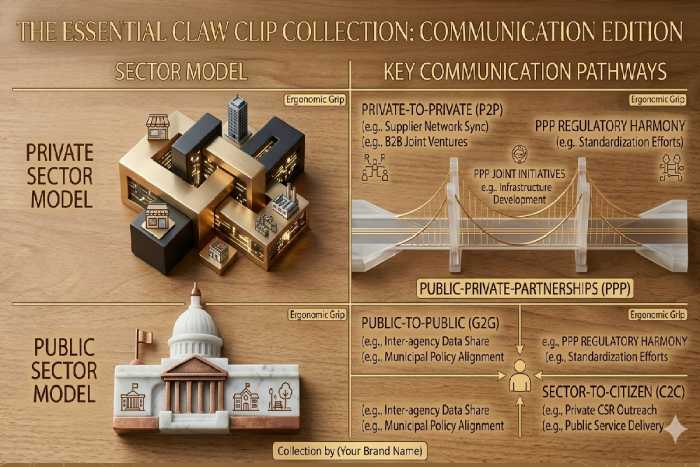
The Public and private sector communications differ fundamentally in goals, audiences, tone, and constraints, though both aim to build trust and drive action. Public sector (government, nonprofits) focuses on transparency and public service; private sector (businesses) prioritizes profit and persuasion.
Key Differences
| Aspect | Public Sector | Private Sector |
| Primary Goal | Inform citizens, ensure accountability | Drive sales, build brand loyalty |
| Audience | Diverse public, voters, regulators | Customers, investors, employees |
| Tone | Formal, neutral, inclusive | Persuasive, branded, emotional |
| Constraints | Legal compliance, bureaucracy | Market competition, agility |
| Metrics | Public trust, policy adoption | Revenue lift, engagement rates |
| Examples | Health alerts, budget announcements | Product launches, ad campaigns |
Public Sector Communication
Governments communicate to educate and comply. Think India’s Digital India campaign—clear policy updates via websites and town halls build compliance.
Strengths: Broad reach, credibility.
Challenges: Slow approvals, risk aversion.
Best Practices:
- Use simple language for all literacy levels.
- Prioritize two-way feedback (e.g., public consultations).
- Leverage WhatsApp/SMS for rural India outreach.
Private Sector Communication
Corporates sell visions. Reliance Jio’s launch used emotional ads (“Jio for all”) to capture 100M users fast.
Strengths: Speed, creativity, data-driven.
Challenges: Trust erosion during scandals.
Best Practices:
- Segment audiences (e.g., LinkedIn for B2B, Instagram for Gen Z).
- A/B test messaging for 20-30% conversion bumps.
- Employee advocacy amplifies reach 5x.
Overlaps and Hybrid Cases
Both use social media and crisis PR. Public-private partnerships (PPPs) blend them—joint press releases for infrastructure projects align stakeholders.
2026 Trends:
- Public: AI chatbots for citizen queries, live-streamed town halls.
- Private: Personalized video emails, VR demos.
- Shared: Social listening tools track sentiment real-time.
Practical Tips for Switching Sectors
Moving from private to public? Dial back persuasion; emphasize facts. Public to private? Add urgency and calls-to-action.
Internal Comms Note: Public lags in resourcing—private invests 3x more in employee tools.
Real-world: During COVID, both sectors learned transparent, empathetic messaging retains 25% more trust.
Choose strategies matching your sector’s DNA for maximum impact.
FAQ SECTION
What is public sector communication?
Messaging from governments to inform citizens on policies and services transparently.
How does private sector communication differ?
Focuses on profit via marketing, unlike public emphasis on accountability.
Key differences between public and private sector communication?
Public prioritizes society; private drives sales and branding.
Examples of public-private communication partnerships?
Infrastructure projects with joint announcements.
Best channels for public sector communication?
Official websites, press, social media.
How to measure private sector comms ROI?
Track sales lift, engagement rates.
Trends in sector communication 2026?
AI personalization, hybrid digital-physical events.
Conclusion
Mastering communication in both public and private sectors boils down to aligning clear objectives with the right audiences—public for broad transparency and civic action, private for targeted persuasion and growth.