
Last Updated: October 29, 2026
Content Silo Definition
A content silo is structuring describes a form of technical SEO that helps you organize your material based on relevant content.
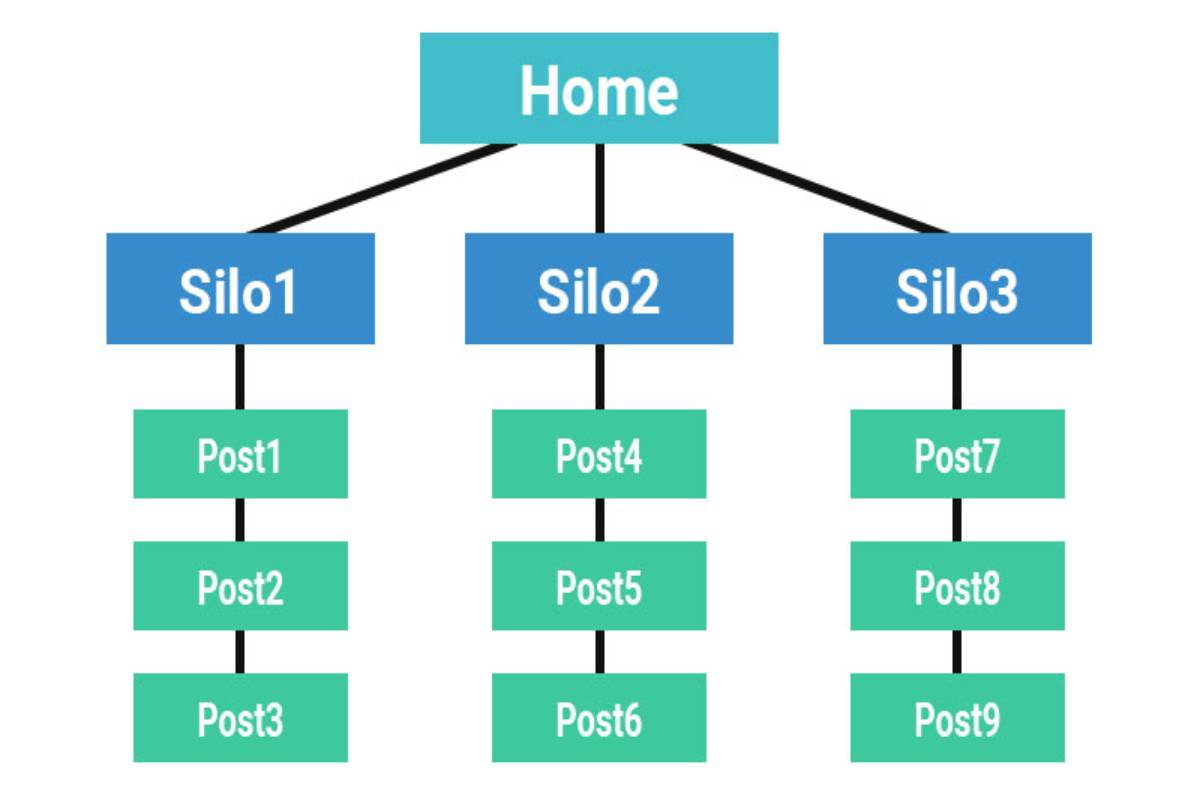
In the content silo, it has several layers of material for a particular topic. At the top, we take a more general page that answers the broad question, for example, “What is SEO?”
And your “What is SEO?” silo might divide into “On-Page SEO” and “Off-Page SEO.” On the third level, your “On-Page SEO” capacity splits into pages that deals with keyword research or alt tags.
It also, in contrast, “Off-Page SEO” will look at topics related to influencer marketing, building backlinks, and social media.
A content silo allows organized content base on user needs and search behavior to maximize the traffic you capture and your brand reach.
We research the topics that matter the most to your audience and create an organized grouping of content that thoroughly explores their topic of interest.
It is allowing them to click on different links and learn about related ideas. It firmly establishes your brand as an authority in the field.
Table of Contents
Connections between Content Silo and Semantic webs
- The goal of technical SEO is to shape a more robust, more efficient site. With content silos, it organize your pages to easily find their way around the domain.A well-organized content silo makes it easier to identify existing articles that can be updated and reused to extend their value. Through content republishing, you can refresh outdated information, improve existing articles, and make valuable resources more visible without always creating new content from scratch.
- And also, google understands how your site is organized by following internal links, so the silos also help Google see the expertise you have in a particular area.Building an effective content silo requires understanding what your audience searches for and which topics deserve priority. Using content intelligence can help you analyze audience behavior, identify content gaps, and make informed decisions about how to organize related pages into meaningful topic clusters.
- Since the silos, it helps organize your thoughts and ideas and build categories around topics. It also demonstrates competence in a particular area, which will then help establish your domain authority.
- The critical message that the significant Google updates in the past few years, including rank brain and hummingbird, has also forced a substantial shift in content development emphasis.
- And before these algorithm updates, keywords were the cornerstone of helping Google understand your relevance to a particular topic.
- And instead, the algorithm uses semantics to “understand” text by looking at the language used throughout the material to grasp the meaning and relevance.
- It creates silos, and it naturally develops text and visuals around a particular topic area’s typical questions.Before creating a content silo, review your existing website to identify relevant pages, outdated articles, duplicate topics, and opportunities for better internal linking. Conducting a website content audit helps you understand your current content structure and determine which pages should be grouped together to strengthen topical relevance.
- Since the content is connected, Google will be able to “see” that you are an authority on the subject and that your material is highly relevant for the semantic web.
- Therefore, a content silo helps you make your content more appealing to the modern Google algorithm’s intent-centered practices.
How do we usage silos in SEO Strategy?
- Silo structuring for the content requires breaking down your material into various categories. And beginning to rank the pages as the top page for that topic, a secondary page, or a tertiary page.Content silos can organize different content formats around a central topic, including blog posts, guides, reports, and downloadable resources. An interactive white paper can add value to a content cluster by presenting research, insights, and useful information in an engaging format that encourages readers to explore a subject in greater depth.
- Since these silos are constructs as part of a technical SEO strategy, you must make these categories wisely. It bases each type upon search volume, user behavior, and your buyer’s journey–or conversion path.A strong content silo should address the audience’s needs rather than focus exclusively on promoting a particular product or service. Creating product-agnostic content allows you to provide objective information, answer common questions, and build trust while connecting related articles through a logical internal linking structure.
- And remember, silos are intended for our visitors first and are the central part of the UX design. Its search engines, and helping them understand the website’s topical and contextual meaning, are the secondary target.Planning a content silo becomes easier when you have a documented structure for topics, subtopics, target keywords, and internal links. Using a content strategy template helps you map pillar pages and supporting articles, maintain consistency across your website, and identify opportunities to improve your overall content architecture.
- And ultimately, the ideal strategy is to closely align your content coverage to high-performing. It also, extremely relevant keyword groupings at each level of the silo.
- And each topical name must represent the high-performing head-term. The topic is then taking a keyword universe that tightly correlates with the head term.
- Also, the content coverage found at each level, therefore providing semantically relevant words for the silo.